
Define the Fit for Your Underwear Range
Intivex Underwear supports size and fit development for brands, importers and private-label buyers sourcing men’s boxer briefs, boxers and trunks, women’s panties, boyshorts and high-waist briefs, plus selected seamless styles.
Development starts with your size chart, tech pack, physical reference sample or selected existing style. We review the intended fit, garment measurements and material together before sampling. Size labels such as S, M and L need corresponding specifications; they do not establish a consistent fit across different brands or products.
Establish Measurements and Measuring Methods
Please distinguish body measurements from finished garment measurements. A body size chart helps describe the target customer, while a garment specification defines the dimensions used for sample development and production checks.
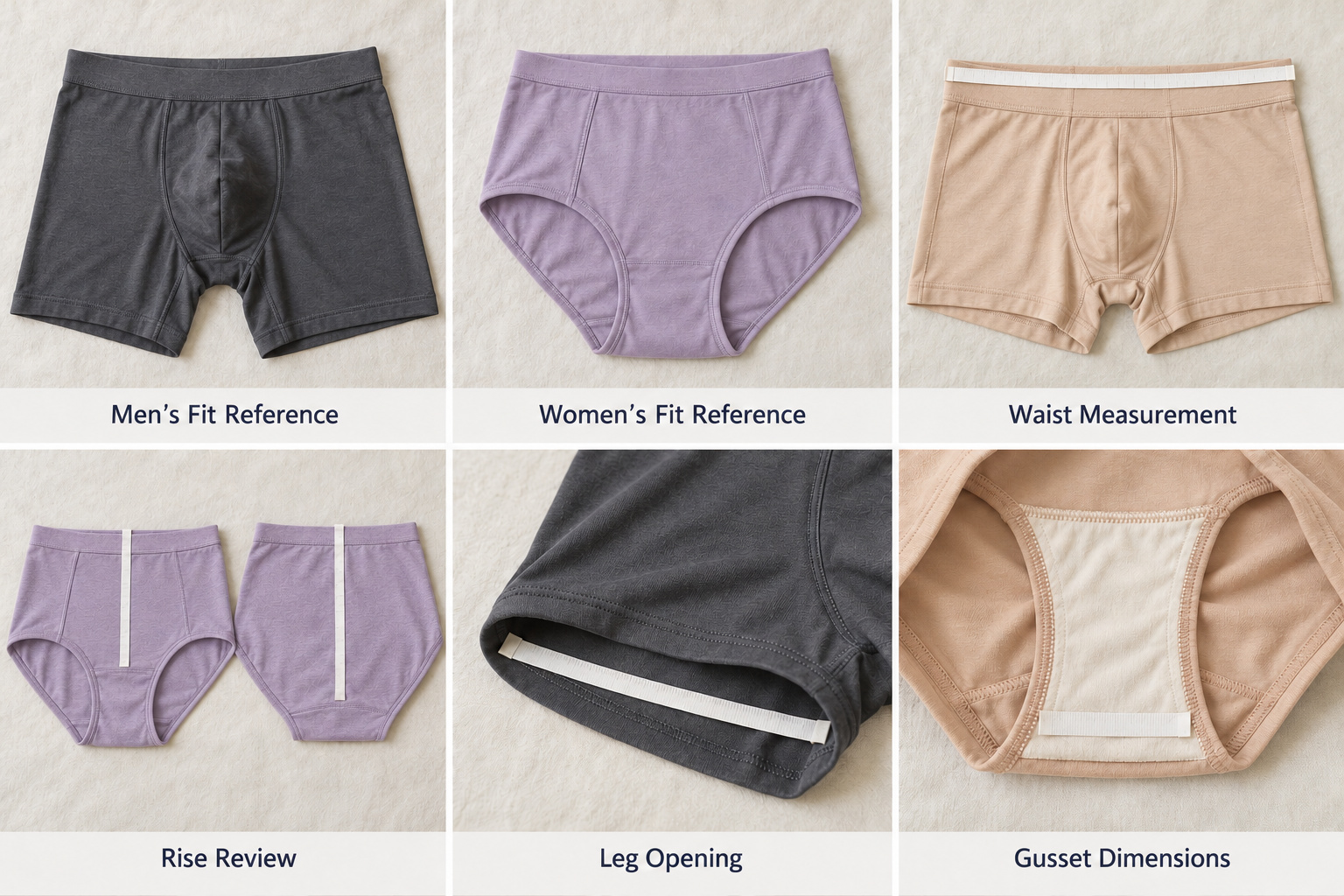
Depending on the style, relevant points include relaxed waist width, front and back rise, side length, leg opening, inseam and gusset dimensions. Each point needs a clear measuring method, unit and agreed tolerance. The specification should also state whether a measurement is taken flat, relaxed or under an agreed stretch condition.
Reference samples help clarify shape and coverage. Photographs alone may leave uncertainty about dimensions, so unresolved details are confirmed before the sample is approved.
 Match Fit Development to Fabric and Elastic
Fabric stretch, thickness and recovery can affect the finished fit. Changing the body material or waistband may require another sample review even when the pattern dimensions remain unchanged.
Confirm your fabric and material selection alongside the size specification. Waistband width, elastic behavior and attachment also need to suit the garment structure. For selected seamless products, size adjustments are reviewed against the knitting construction rather than assumed to follow the same development route as cut-and-sew underwear.
Review Size Grading and Sample Revisions
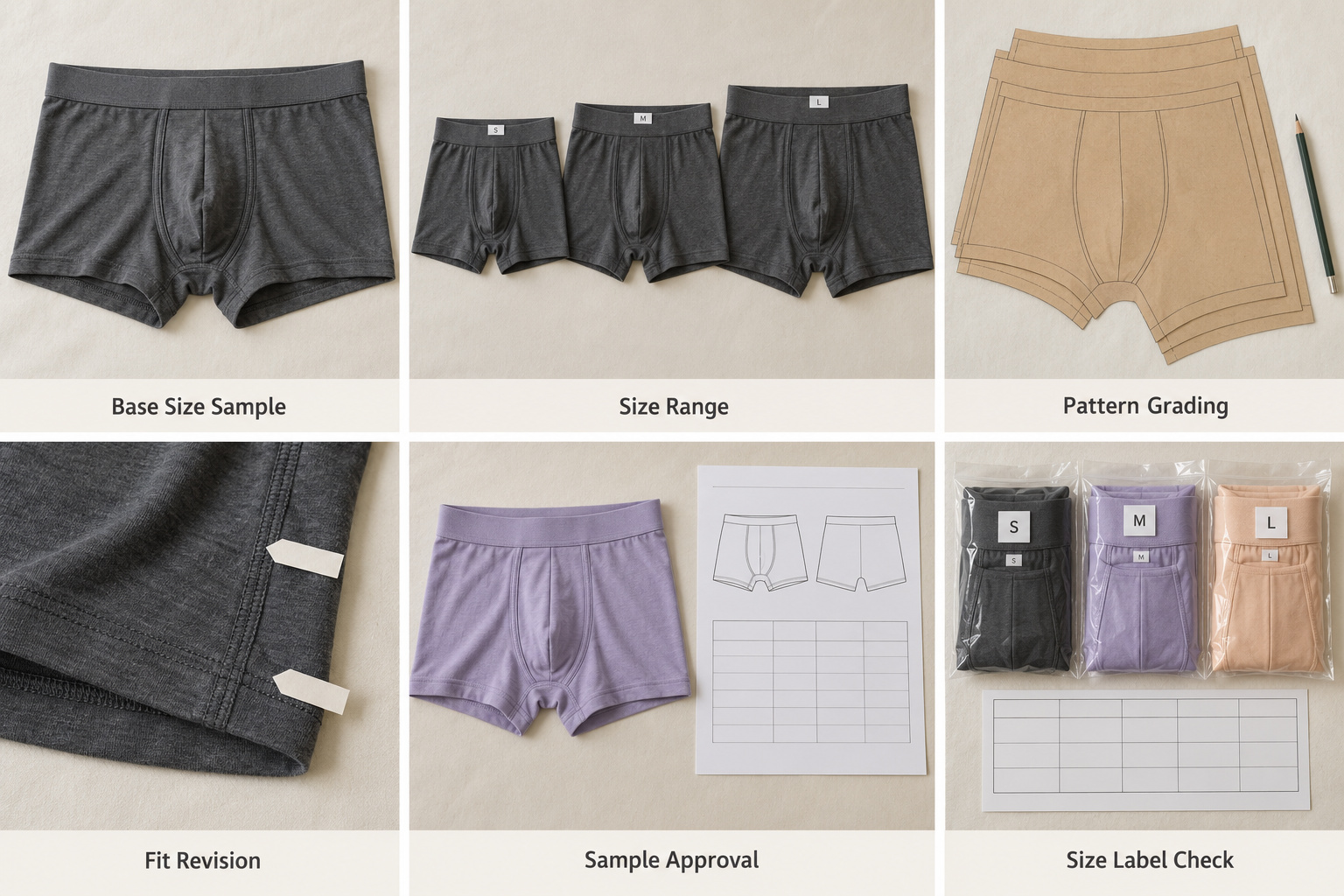
Once the base size is agreed, we review the requested size range and grading requirements. Different measurement points may need different increments; increasing every dimension by the same amount can change coverage and proportions.
Our pattern making and size grading work follows the confirmed product specification. Buyers should identify which sizes require samples or additional review before production.
When reviewing samples, provide feedback against named measurement points and specific fit concerns. Comments such as “increase front rise” or “reduce leg opening” are more actionable than “make it more comfortable.” Buyer fit feedback is reviewed together with garment measurements before revisions are finalized.
 Carry Approved Sizes into Bulk Orders
Approved measurements, measuring methods and sample details become the reference for first-piece, in-line and final checks. Our measurement and inspection process reviews key dimensions and fit-related construction points against those requirements.
The order also needs a quantity breakdown by size. Confirm size labels, barcode references and any multi-pack assortments so packing instructions match the approved garments.
Typical MOQ is around 500–1,000 pieces per style/color, with the size breakdown reviewed as part of the order. Sampling usually takes about 7–12 days, depending on materials and fit development; revisions may affect timing. Bulk production usually takes about 30–45 days after sample and order confirmation.
Send your product type, size chart, reference sample, fabric requirements and quantity by size so we can assess development, sampling and quotation.