
 Manufacturing for OEM and Repeat Orders
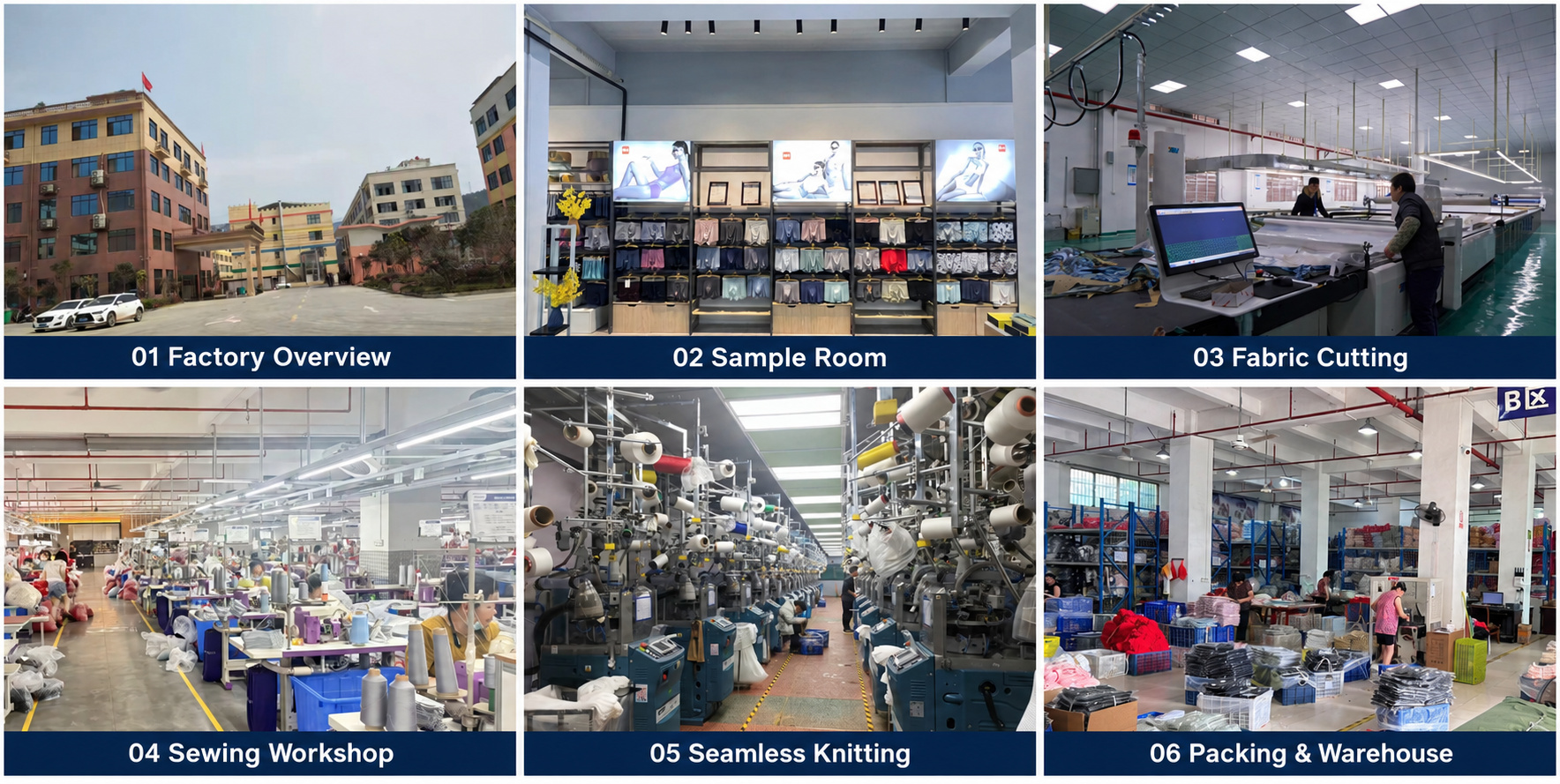
Intivex Underwear is a China-based underwear manufacturer and OEM/ODM supplier in Yiwu, Zhejiang. We produce men’s boxer briefs, boxers and trunks, women’s panties, boyshorts and high-waist briefs, plus selected seamless underwear for business buyers.
Our manufacturing work supports brands, importers, wholesalers, distributors and retail chains that need confirmed specifications and repeatable bulk production. Product construction determines the production route: cut-and-sew garments require fabric preparation, cutting and sewing, while selected seamless styles begin with knitting.
This page outlines the main manufacturing stages and the decisions that affect fit, appearance, order consistency and delivery.
Approved Samples Guide Production
Before production release, we confirm fabric, measurements, fit, waistband, color, branding, labels and packaging against the approved sample and order specification. A sample alone may not communicate every requirement, so written specifications should record the details needed for production and inspection.
Orders can start from a tech pack, physical reference sample or selected existing style. Buyers developing a branded range can review our OEM and private-label options before finalizing the production brief.
Changes to construction, materials or branding after approval require review because they may affect purchasing, sampling and the production schedule.
Fabric and Trim Preparation
Materials are checked before entering production. The review covers the selected fabric or yarn, elastic, waistbands, labels and other trims against the confirmed order requirements. Missing or inconsistent components can interrupt production even when the main fabric is available.
Cotton, cotton/spandex, modal, nylon/spandex and polyester blends are selected according to garment construction and the approved specification. Selected seamless products require suitable yarns and a separate knitting review.
Our fabric and trim preparation stage helps identify material differences before they reach cutting, sewing or knitting.
Pattern Preparation, Spreading and Cutting
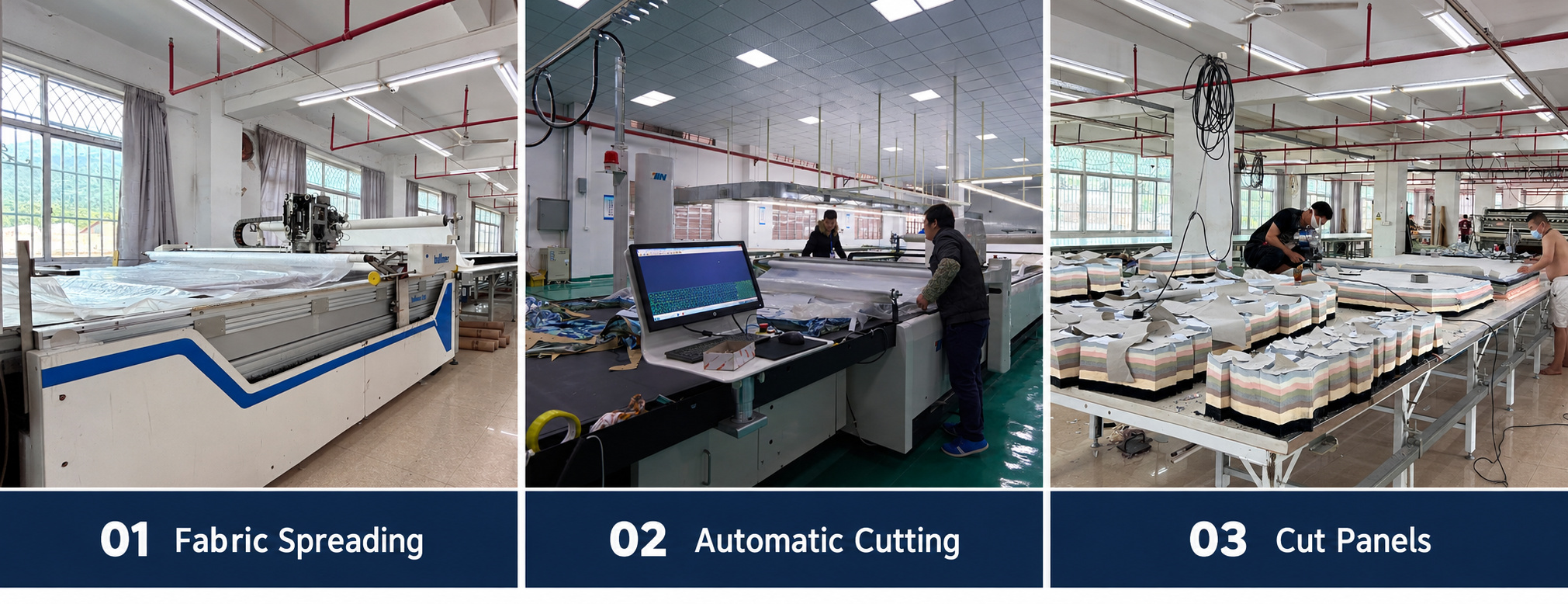
For cut-and-sew underwear, the pattern and size requirements guide fabric spreading and cutting. Key dimensions, garment shape and the planned size ratio must correspond to the confirmed order.
Stretch materials need handling suited to their construction. Cutting decisions affect panel dimensions, seam alignment and the fit of the finished garment. Material direction and printed fabric placement are reviewed where relevant to the approved design.
Buyers requesting a revised fit should confirm those changes during sampling. Introducing a new rise, leg length or waistband dimension after cutting can create additional work and delay.
 Sewing and Waistband Assembly
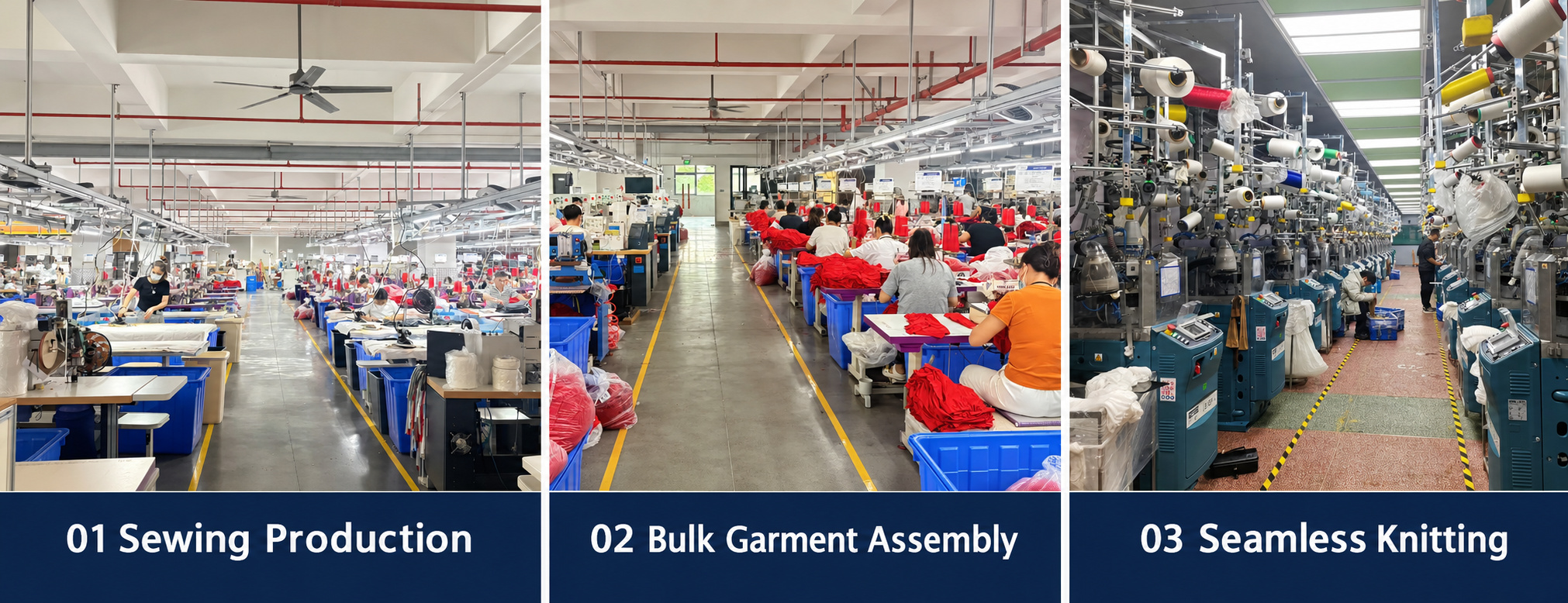
Sewing operations are selected according to product construction. Lockstitch, overlock, flatlock and coverstitch operations may be used where required, together with waistband-attaching and heat-transfer equipment for approved designs.
During sewing and garment assembly, attention is given to panel alignment, stitching, waistband attachment and the construction details that influence fit. Different boxer, trunk and women’s underwear styles require different assembly sequences.
First-piece approval provides an early checkpoint before the same construction is repeated across the production batch.
Selected Seamless Production
Selected seamless underwear follows a knitting route rather than the same cutting sequence used for cut-and-sew styles. Yarn choice, garment dimensions and the requested construction are reviewed before production.
Seamless availability depends on the style and project requirements. The term does not mean every product can be made without any subsequent sewing or component attachment. Follow-on operations are determined by the approved design.
We assess seamless requests against the actual product scope instead of assuming a sewn reference sample can be reproduced through knitting without changes.
 Measurement and Final Inspection
First-piece, in-line and final inspections check relevant measurements, stitching, waistbands or elastic, logo position, labels and visible defects against the approved specification.
Our measurement and inspection work focuses on the agreed measurement points and product construction. Buyers should identify critical requirements before production so inspection uses the correct reference.
Third-party fabric, colorfastness, shrinkage and product testing can be arranged when required. Testing scope and timing should be discussed early, particularly when results are needed before shipment approval.
Packing and Shipment Preparation
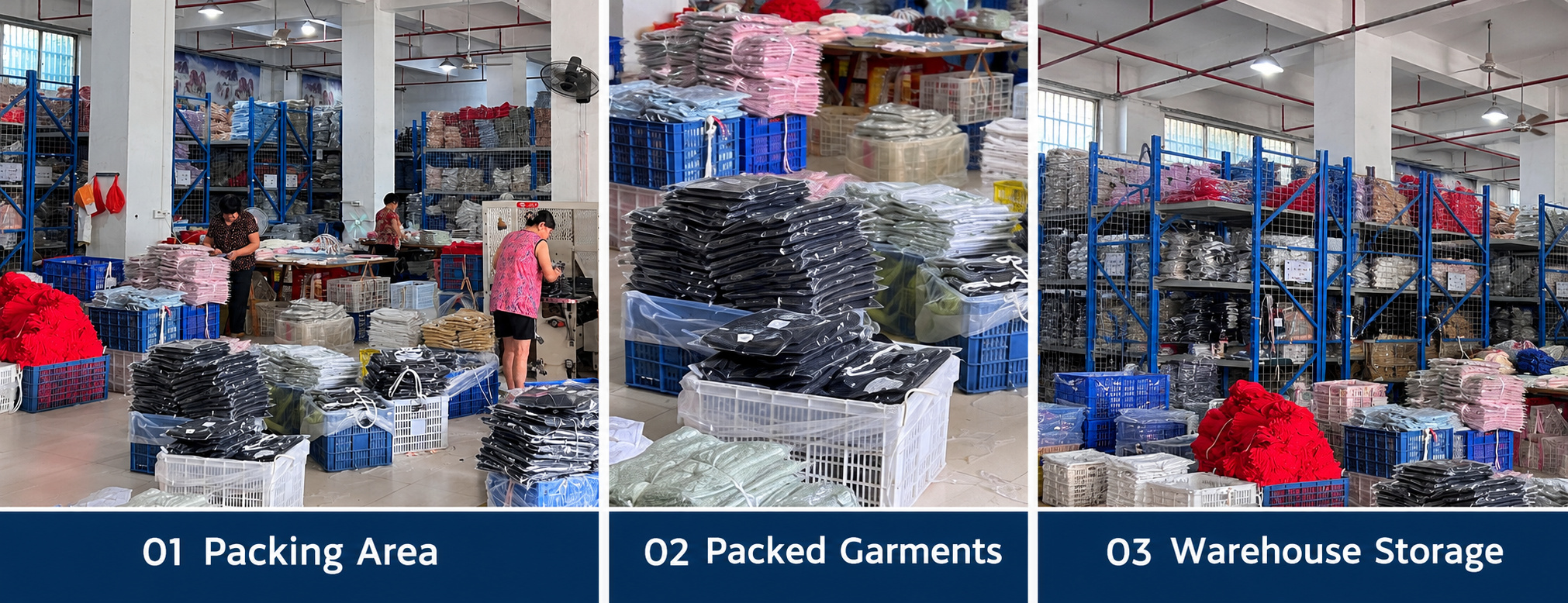
Finished garments are checked before packing quantities and order details are verified. Individual bags, branded bags, paper boxes, multi-packs, hangtags and barcode labels are prepared according to the confirmed packing specification.
Style, color and size combinations need to match the order. Export-carton preparation then covers carton contents, quantities and agreed shipping marks.
 Production Timing and Quotation Requirements
Typical MOQ is around 500–1,000 pieces per style/color. Sampling usually takes about 7–12 days, and bulk production usually takes about 30–45 days after sample and order confirmation.
Final timing depends on materials, construction, size mix, branding, packaging and quantity. Send your product specification, estimated order breakdown, destination and delivery target so we can review production requirements and quotation conditions.