
Check Underwear Against the Approved Specification
Intivex checks underwear measurements and workmanship against the approved sample and confirmed order requirements. Inspection supports men’s boxer briefs, boxers and trunks, women’s panties, boyshorts and high-waist briefs, plus selected seamless styles.
For brands, importers and wholesale buyers, the purpose is to identify differences that affect fit, appearance, branding or packing accuracy. First-piece, in-line and final checks provide inspection points throughout production. The relevant checks depend on garment construction and the buyer’s agreed specification.
Agree on Measurement Methods
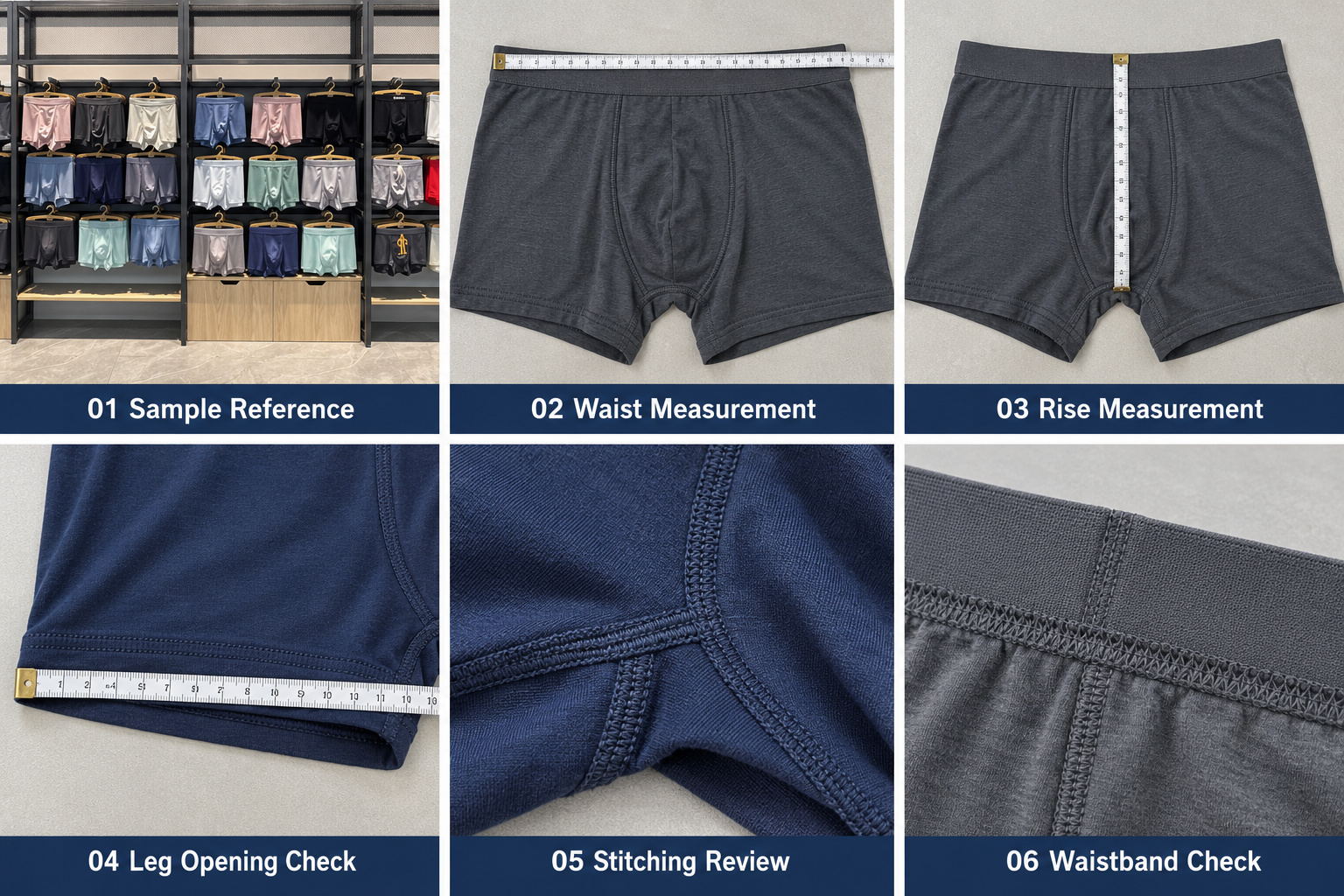
A measurement sheet should identify the points being checked, the measurement method and agreed tolerances. Depending on the style, these may include waist width, front and back rise, garment length, hip width and leg opening.
Body measurements and finished-garment measurements must be clearly distinguished. Elasticated areas also require a defined measurement condition. A relaxed waistband measurement cannot be compared directly with a stretched measurement.
Our size and fit customization review helps establish these references during development. Buyers should confirm critical dimensions before production so sample comments and bulk inspection use the same basis.
 Review the First Assembled Garment
First-piece approval checks the initial production result before the same construction is repeated across the batch. Relevant points include panel alignment, stitching, key measurements, waistband or elastic attachment, labels and branding position.
This stage connects the approved development reference with actual production. If a difference is found, its cause needs to be reviewed before continuing with the affected operation.
Through sewing and garment assembly, construction details are checked alongside the component requirements. A correct measurement does not replace a workmanship check, and neat stitching does not confirm the correct size.
Inspect Workmanship During Production
In-line inspection reviews relevant dimensions and visible construction details as garments move through production. Checks may cover skipped stitches, uneven seams, panel alignment, gusset attachment and leg-opening finishes where applicable.
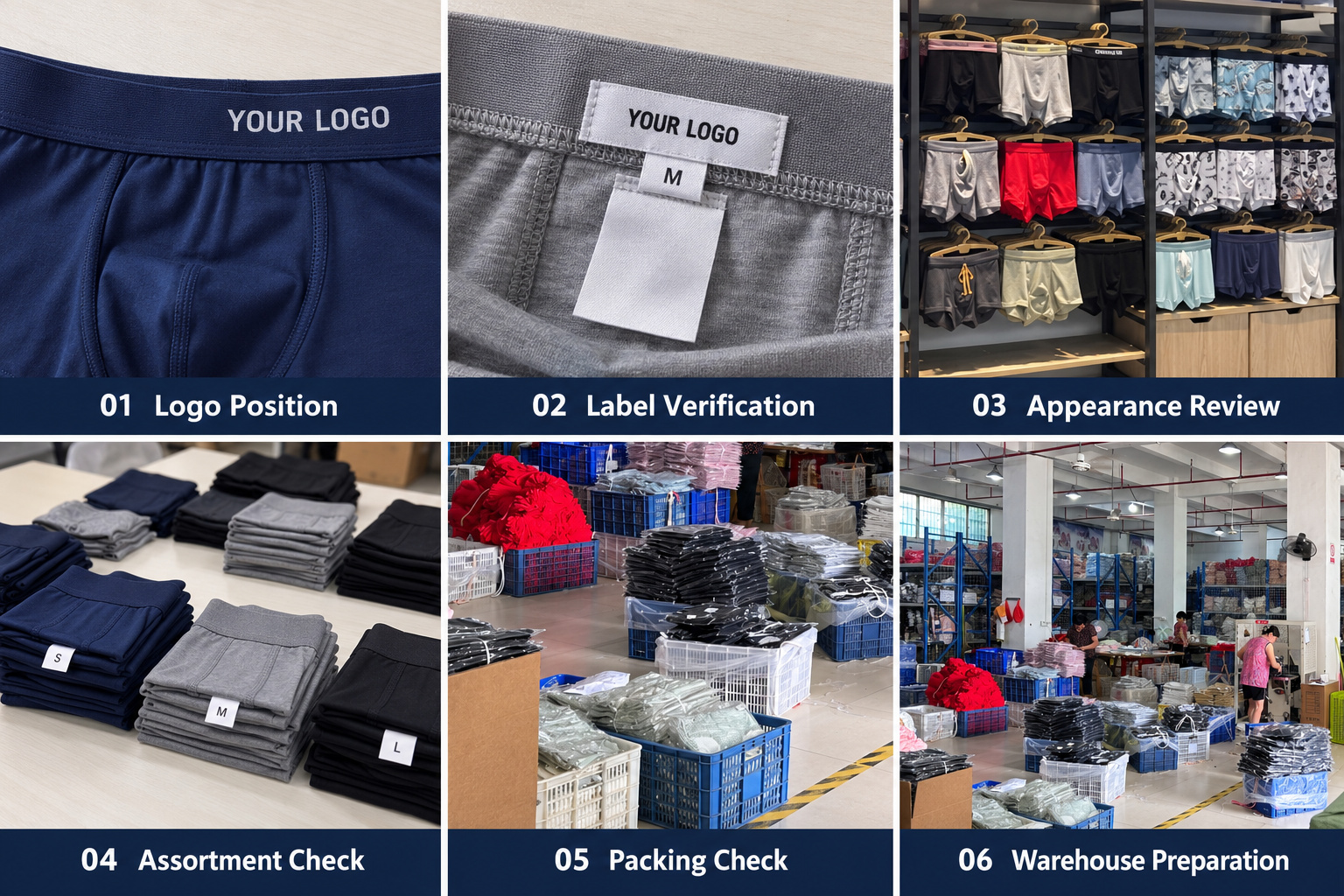
Waistbands and elastic are checked against the approved construction and appearance. Logo orientation, label placement and size identification also need to correspond to the garment being produced.
Selected seamless styles are inspected according to their knitting construction and subsequent assembly requirements. They should not automatically receive an identical checklist to cut-and-sew products.
Verify Branding, Appearance and Packing
Final inspection reviews finished garments for relevant measurements, stitching, visible defects, branding and labels. Buyers should identify any appearance requirements that need particular attention, including logo placement or matching components.
Packing checks cover the confirmed style, color and size combinations, quantities, labels and packaging details. Multi-pack orders require clear instructions because an incorrect combination can make an otherwise acceptable garment unsuitable for the buyer’s program.
Confirmed printing and packaging requirements provide the reference for checking branded bags, paper boxes, hangtags, barcode labels and export-carton details.
 Arrange Testing and Review Differences
Routine garment inspection and laboratory testing serve different purposes. Third-party fabric, colorfastness, shrinkage and product testing can be arranged when required by the order, buyer specification or destination market.
Testing requirements should be discussed early, including the material or product to be tested and when results are needed. Do not assume that a visual inspection confirms performance or certification.
Send your measurement sheet, approved reference, branding files and packing instructions for review. When differences are identified, they are assessed against the agreed requirements to determine the necessary correction and any effect on the production schedule.