
Prepare Cut Panels for Underwear Production
Fabric spreading and cutting turn approved patterns into the panels used for cut-and-sew underwear. At Intivex, this stage supports men’s boxer briefs, boxers and trunks, women’s panties, boyshorts and high-waist briefs according to their construction.
For brands, importers and wholesale buyers, cutting affects garment dimensions, seam alignment, appearance and material consumption. Preparation starts with confirmed fabric, patterns and order quantities. Selected seamless products follow a knitting route and do not use the same panel-cutting sequence.
Confirm Materials and Pattern Versions
Before spreading, the fabric must correspond to the confirmed material and color requirements. Patterns should reflect the approved sample, size range and latest agreed revisions. An outdated pattern can carry the wrong rise, leg length or waistband allowance into the entire batch.
Our pattern making and size grading work establishes the dimensions used for cutting. Buyers should resolve fit changes before this stage begins.
Fabric substitutions also require review. A change in stretch or thickness may affect the sample result even when the panel shape remains unchanged.
Spread Fabric for Consistent Cutting
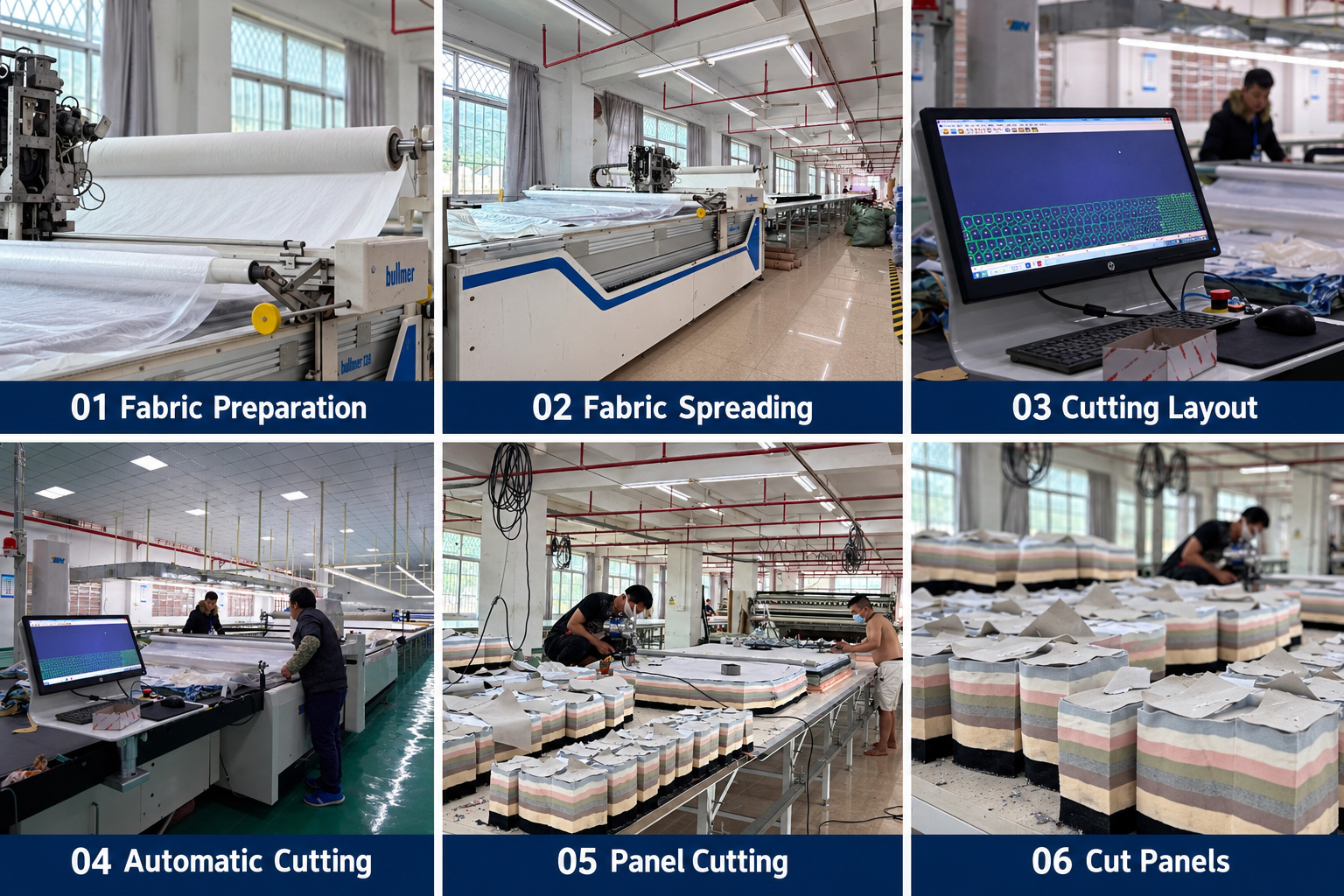
Spreading arranges fabric layers for the planned cutting operation. Stretch underwear fabrics require handling that avoids unnecessary tension or distortion. Uneven spreading can cause differences between cut panels and complicate assembly.
Fabric direction, usable width and visible material differences are considered when arranging the lay. For striped or printed styles, orientation and placement requirements should be established before cutting.
Material preparation and cutting need to remain coordinated. Through fabric and trim preparation, the selected materials are reviewed against the order before entering production.
 Arrange the Cutting Layout
The cutting layout follows the required pattern pieces and size quantities. Panel orientation, seam requirements and the garment construction influence how pieces are arranged.
Material consumption is also affected by usable fabric width, panel dimensions and any print-matching requirements. A longer boxer brief or revised high-waist style may need a different layout from the reference garment. These changes should be considered during quotation rather than treated as minor adjustments after approval.
Buyers requesting specific print placement should provide clear references and identify which details must remain consistent across sizes.
Cut and Organize Garment Panels
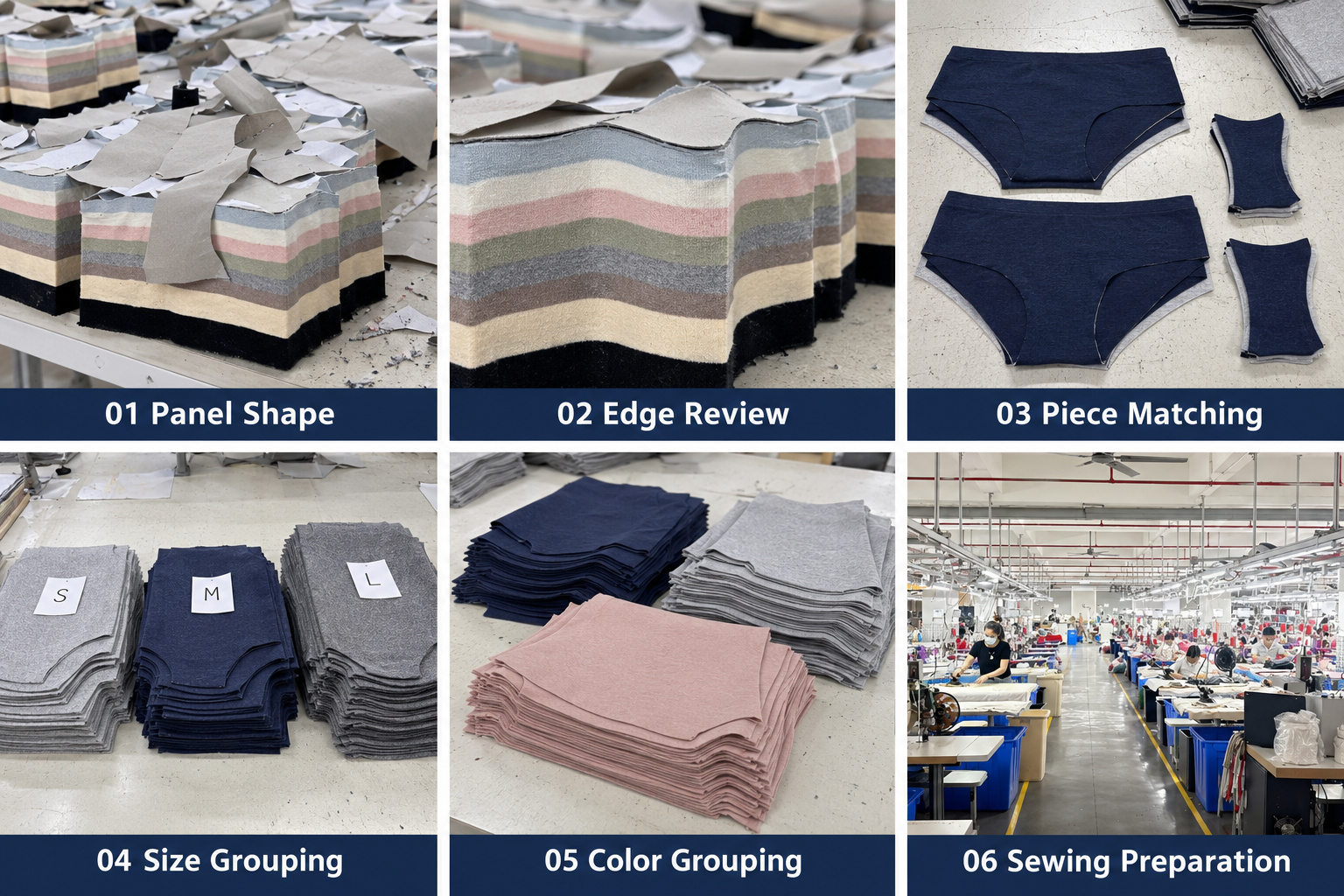
Cutting prepares the garment components for sewing. The selected method depends on the material, lay and production requirements. Attention is given to panel shape, edges and the correspondence between pieces that will be joined.
Cut components need to remain identifiable by style, size and relevant color grouping. Mixing similar-looking panels can create assembly errors that are harder to resolve later.
Organized panels then move into sewing and garment assembly, where their alignment and construction are checked through first-piece approval and subsequent production inspection.
 Confirm Changes Before Cutting Begins
Late changes to fit, fabric, size quantities or print requirements can require a revised layout and additional cutting. Once panels have been cut, some adjustments may require replacement material rather than a simple sewing correction.
Send the approved specification, fabric requirements, size breakdown and any directional print details for review. Cutting is scheduled within the overall production plan, which usually takes about 30–45 days after sample and order confirmation, depending on materials, construction, quantity, branding and packaging.