
Material Selection for Your Underwear Program
Intivex Underwear helps brands, importers and wholesalers select materials for OEM and private-label underwear. Options include cotton, cotton/spandex, modal, nylon/spandex, polyester blends and selected seamless yarns, subject to product construction and availability.
Material review starts with the intended garment: boxer briefs, boxers, trunks, panties, boyshorts or high-waist briefs. Please share your reference sample or fabric specification, target fit, colors and estimated quantity. We assess the material alongside the garment rather than treating fabric selection as a separate purchasing decision.
Confirm Composition, Weight and Construction
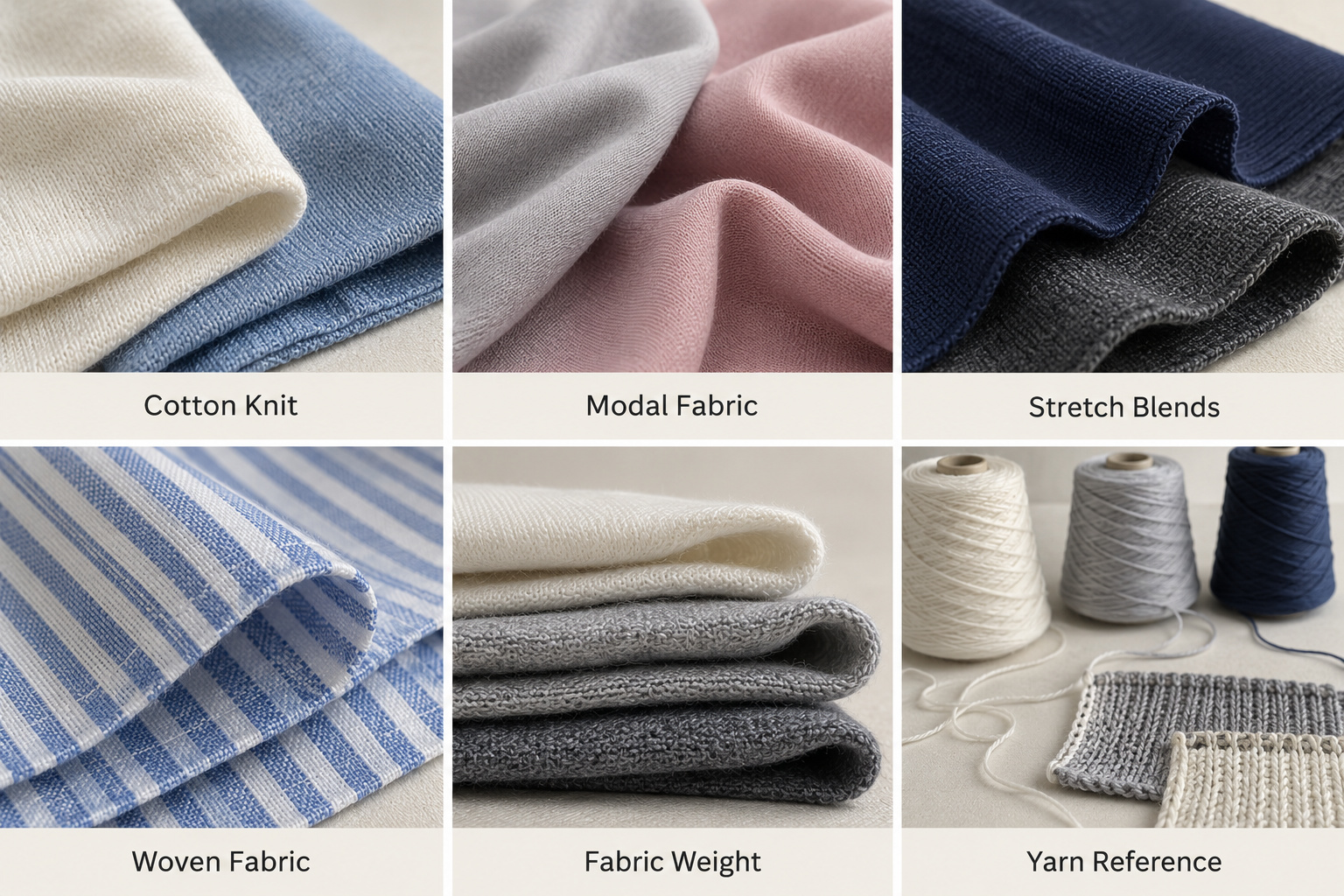
A fiber name alone is not enough for an accurate quotation. Cotton fabrics can differ in weight, construction, finish and stretch. Modal and synthetic blends also need a defined specification to establish the intended handfeel and garment behavior.
Where available, provide the composition percentage, fabric weight, knit or woven construction, and a physical swatch. If you only have a finished reference garment, we can review material options during sampling; an exact match should not be assumed from photographs.
Men’s boxers may use woven or knit fabrics, while close-fitting styles require material choices suited to their approved construction. Selected seamless products follow a yarn-based development route, with available options reviewed for the specific style.
 Review Stretch, Fit and Matching Components
Stretch direction and recovery affect how a garment follows the approved measurements. Changing fabric can alter the finished fit even when the same pattern is used. Material substitutions therefore need review through a garment sample before production approval.
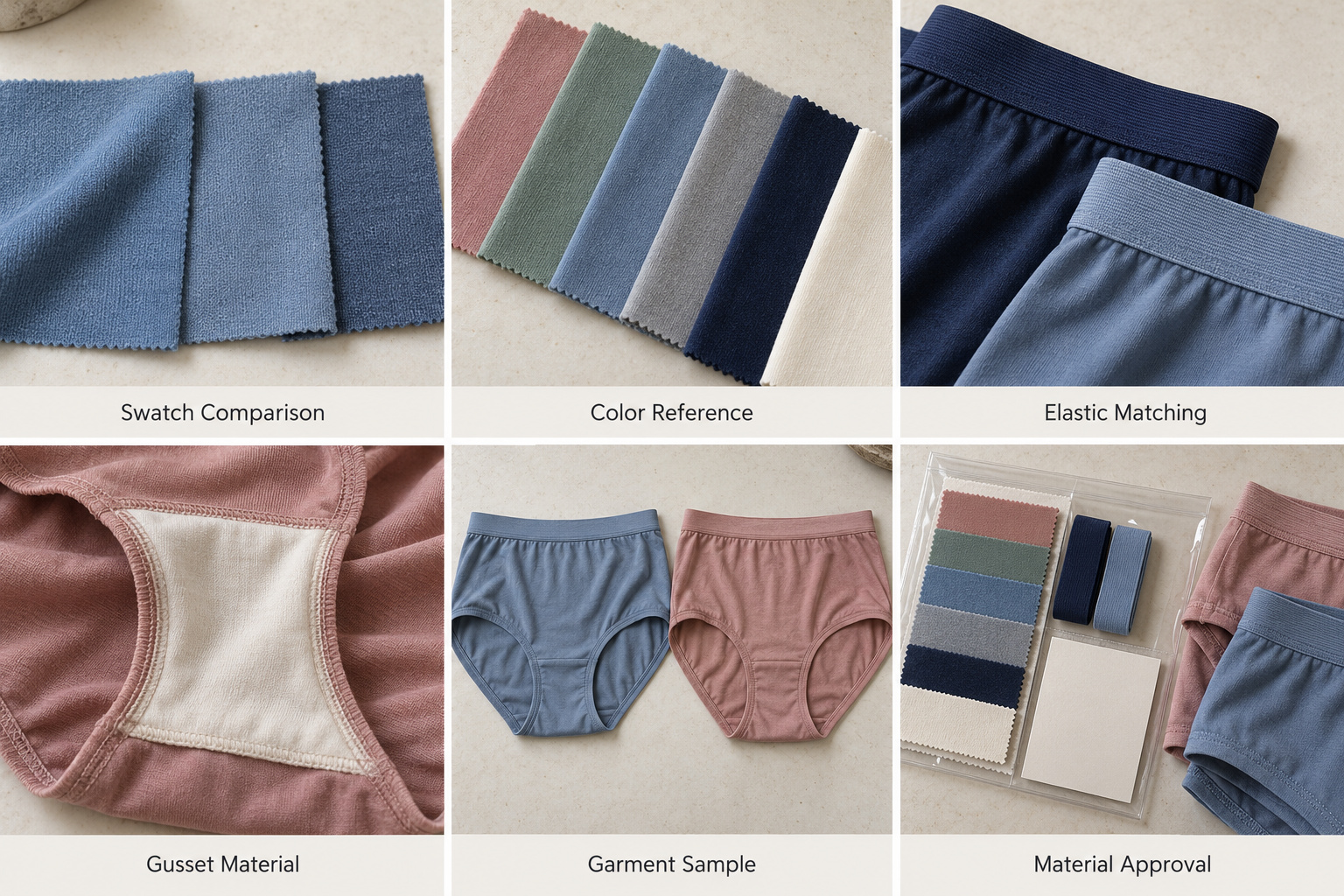
Body fabric should also be considered alongside the waistband, leg elastic and gusset material. Differences in stretch or thickness can affect attachment and seam appearance. Coordinate these requirements with custom waistband and elastic options so the components are assessed together.
For size-sensitive projects, connect material approval with size and fit development. Confirm the measurement requirements again if the selected fabric changes.
Approve Color, Samples and Testing Requirements
Supply a physical color reference or clearly identified target shade. Review body fabric and trims together, particularly when different fibers or constructions are used. The approved material sample establishes the reference for subsequent production checks.
Testing requirements should be discussed before material purchasing. Third-party fabric, colorfastness, shrinkage and product testing can be arranged when required by the buyer’s specification or destination market. Test scope, cost and timing are confirmed separately; material selection does not automatically establish certified or functional performance.
 Plan MOQ, Timing and Bulk Material Preparation
Typical garment MOQ is around 500–1,000 pieces per style/color. Custom fabric sourcing, dyeing, waistbands and packaging may introduce additional minimums, so the final quantity is reviewed against the complete order.
Sampling usually takes about 7–12 days, depending on material availability and development requirements. Bulk production usually takes about 30–45 days after sample and order confirmation; material sourcing can affect the schedule.
Before production, fabric and trim preparation checks the selected materials against the confirmed requirements. Send your fabric reference, product type, size range, colors, quantity and required tests so we can assess sourcing, sampling and quotation.