
Printing and Packaging for Private Label Orders
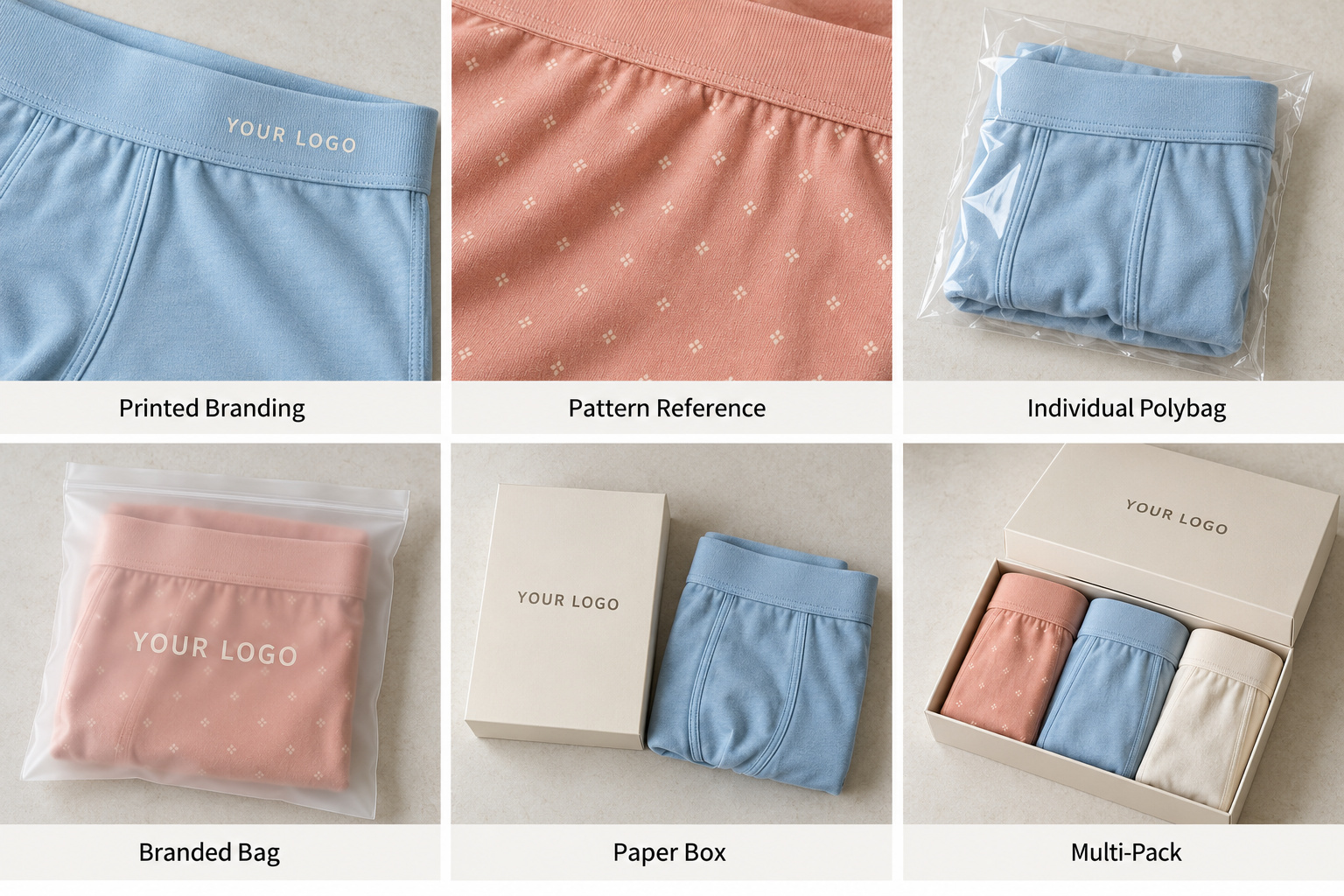
Intivex Underwear supports printing and packaging development for brands, importers, wholesalers and retail purchasing teams. Options include garment printing, individual polybags, branded bags, paper boxes, multi-packs, barcode labels and export cartons.
We review the garment and its packaging together so artwork, product references and pack quantities remain consistent. Projects can begin with your print artwork, packaging reference or existing style. Available methods and materials are confirmed against the product construction, order quantity and delivery requirements.
Confirm Garment Artwork and Print Placement
For garment printing, provide clear artwork, intended dimensions, colors and placement. Identify whether the design is a small branding element or a larger pattern. Repeat designs require confirmation of the repeat layout and how the artwork should appear across the garment.
Printing suitability depends on the selected material, its surface and stretch. Review your fabric and material options before finalizing the print specification. A design approved on one fabric may need another sample review if the material changes.
Printed samples establish appearance and placement. Where wash durability or other testing is required, agree on the assessment requirements separately rather than assume visual approval confirms performance.
 Specify the Retail Pack
Packaging requirements should identify the number of garments per pack, folding arrangement, pack dimensions and intended presentation. A single-piece bag and a multi-pack box need different space and product information.
For branded bags and paper boxes, provide artwork for the relevant faces, opening direction and any required product information. Packaging size should be checked with the actual folded garment, particularly when fabric thickness, waistband width or pack quantity changes.
Coordinate brand wording and product details with custom logo and labels. Packaging artwork should use the same approved references as the garment labels and hangtags.
Define SKU, Barcode and Assortment Details
Buyers should supply barcode data and identify the style, color, size or assortment assigned to each code. If several garments share one retail pack, confirm whether it contains one size, mixed colors or another agreed combination.
Prepare a packing breakdown that connects garment quantities with individual packs, multi-packs and export cartons. Color names and size references should remain consistent across labels, packaging and order documents.
A barcode graphic alone does not define the product assortment. These relationships need confirmation before labels and packaging are prepared.
 Approve Samples and Verify Packing
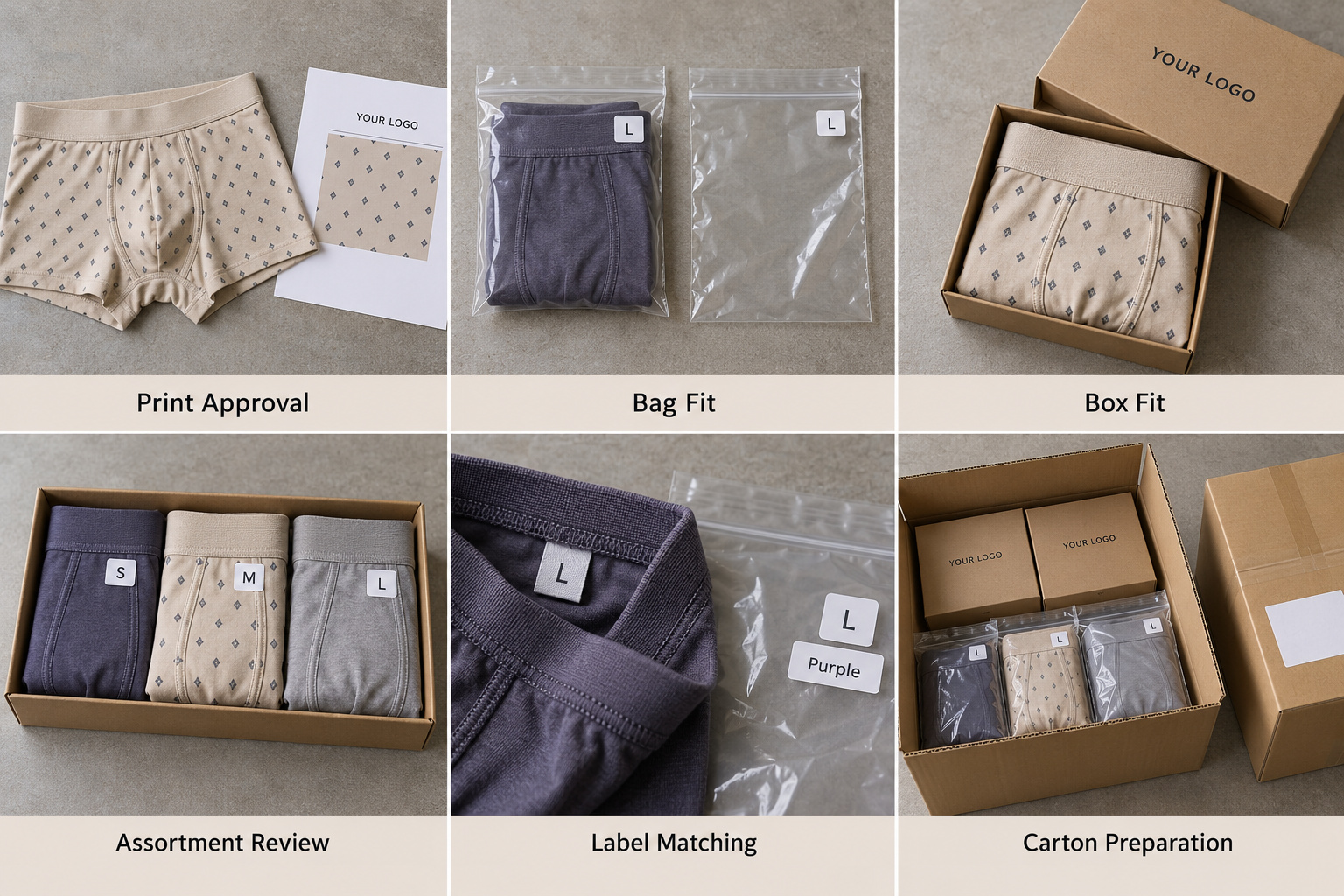
Sample review confirms print appearance, placement, packaging artwork, garment fit within the pack and the agreed assortment. Clearly identify revisions before approval so production and packing teams work from the same reference.
Final checks review branding, labels, pack quantities and packing details against the order specification. Our measurement and inspection process supports this confirmation before export-carton preparation. Carton quantities, shipping marks and destination instructions are reviewed for the agreed shipment arrangement.
Plan MOQ, Costs and Delivery
Typical garment MOQ is around 500–1,000 pieces per style/color. Custom printing and packaging may introduce separate minimums. Artwork versions, print requirements, packaging materials, box construction and pack quantities affect quotation.
Sampling usually takes about 7–12 days, depending on materials and development requirements. Bulk production usually takes about 30–45 days after sample and order confirmation; packaging sourcing and artwork revisions can affect scheduling.
Send your artwork, product specifications, quantity breakdown, packing reference, barcode requirements and destination so we can assess sampling, MOQ, costs and delivery preparation.