
Assemble Underwear to the Approved Construction
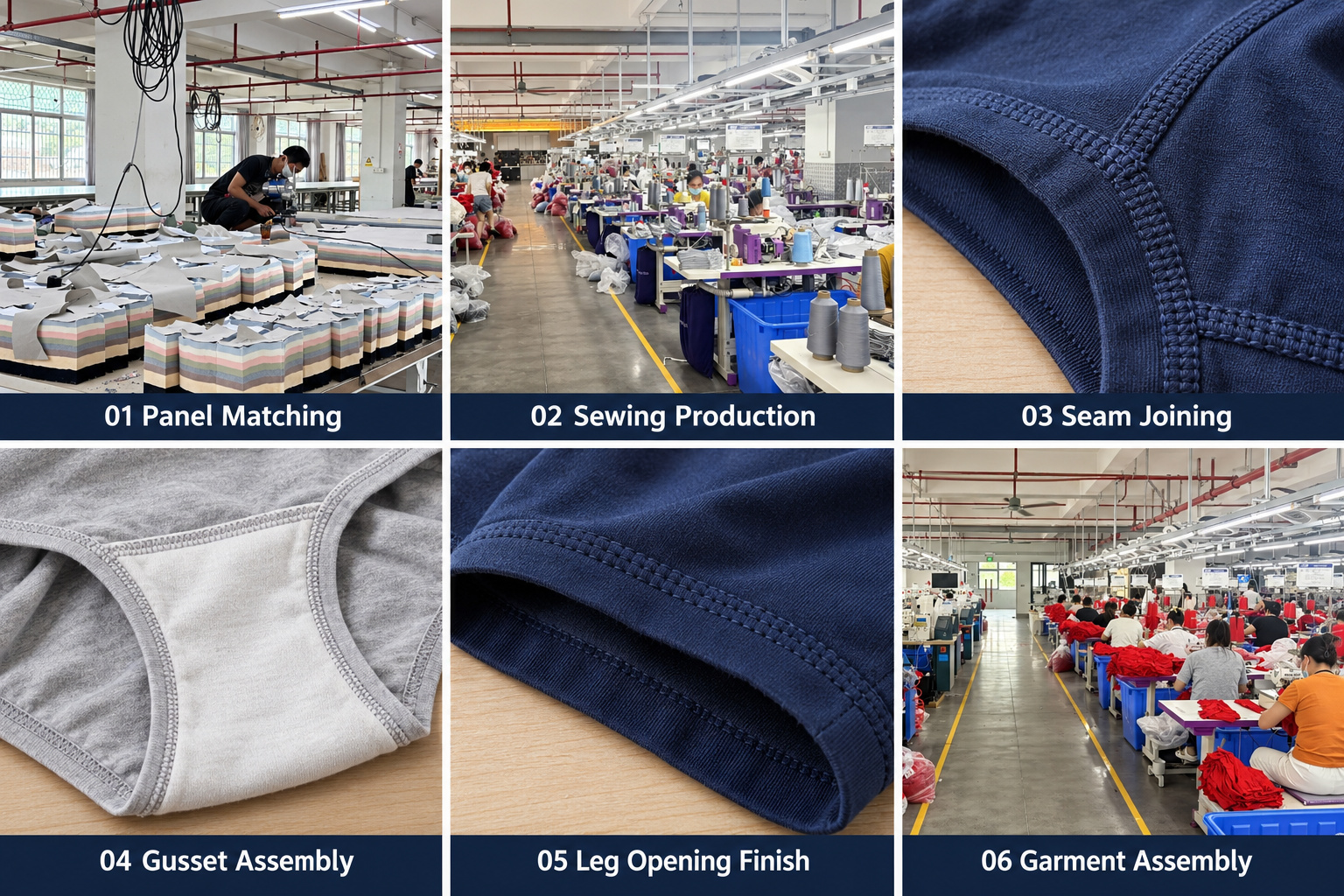
Sewing and garment assembly bring cut panels, waistbands, elastic and labels together into finished underwear. Intivex supports this stage for men’s boxer briefs, boxers and trunks, women’s panties, boyshorts and high-waist briefs.
For brands, importers and wholesale buyers, assembly affects fit, seam appearance and consistency across bulk orders. The sewing sequence follows the approved sample and written specification. Selected seamless styles require only the additional assembly operations relevant to their construction; they do not follow every step used for cut-and-sew garments.
Confirm Panels and Components Before Sewing
Production begins with the correct panels and components for each style, size and color. Similar-looking pieces must remain identifiable so front panels, back panels and gussets are assembled in the intended combinations.
Our fabric spreading and cutting stage prepares the components used for sewing. Pattern revisions and size requirements should already be confirmed before those panels reach the line.
Waistbands, elastic and labels must also match the order. Substituting a component during assembly requires review because differences in width, stretch or attachment can change the finished garment.
Select Seams for the Garment Structure
Lockstitch, overlock, flatlock and coverstitch operations are selected according to the approved construction. Different seams serve different joining and finishing requirements; every style does not need the same combination.
During assembly, attention is given to panel alignment, seam allowance, stitch formation and how the material feeds through the operation. Stretch fabrics need handling that avoids unnecessary distortion. Puckered seams, skipped stitches or uneven joining can affect appearance and the intended fit.
Buyers requesting a particular seam finish should identify it in the tech pack or reference sample before sampling. Changes to seam construction may affect development, production work and quotation.
 Attach Waistbands, Elastic and Labels
Waistband attachment needs to follow the approved dimensions and construction. Uneven feeding or attachment can change the garment’s shape, while incorrect logo orientation can create a visible branding defect.
Through waistband and elastic customization, component requirements are reviewed alongside fit and appearance. The confirmed waistband should be used as the production reference.
Labels are attached at the appropriate assembly stage. Their version, size identification and placement must correspond to the garment being produced. Printed branding or heat-transfer details are handled where required by the approved design.
Approve the First Piece and Check Production
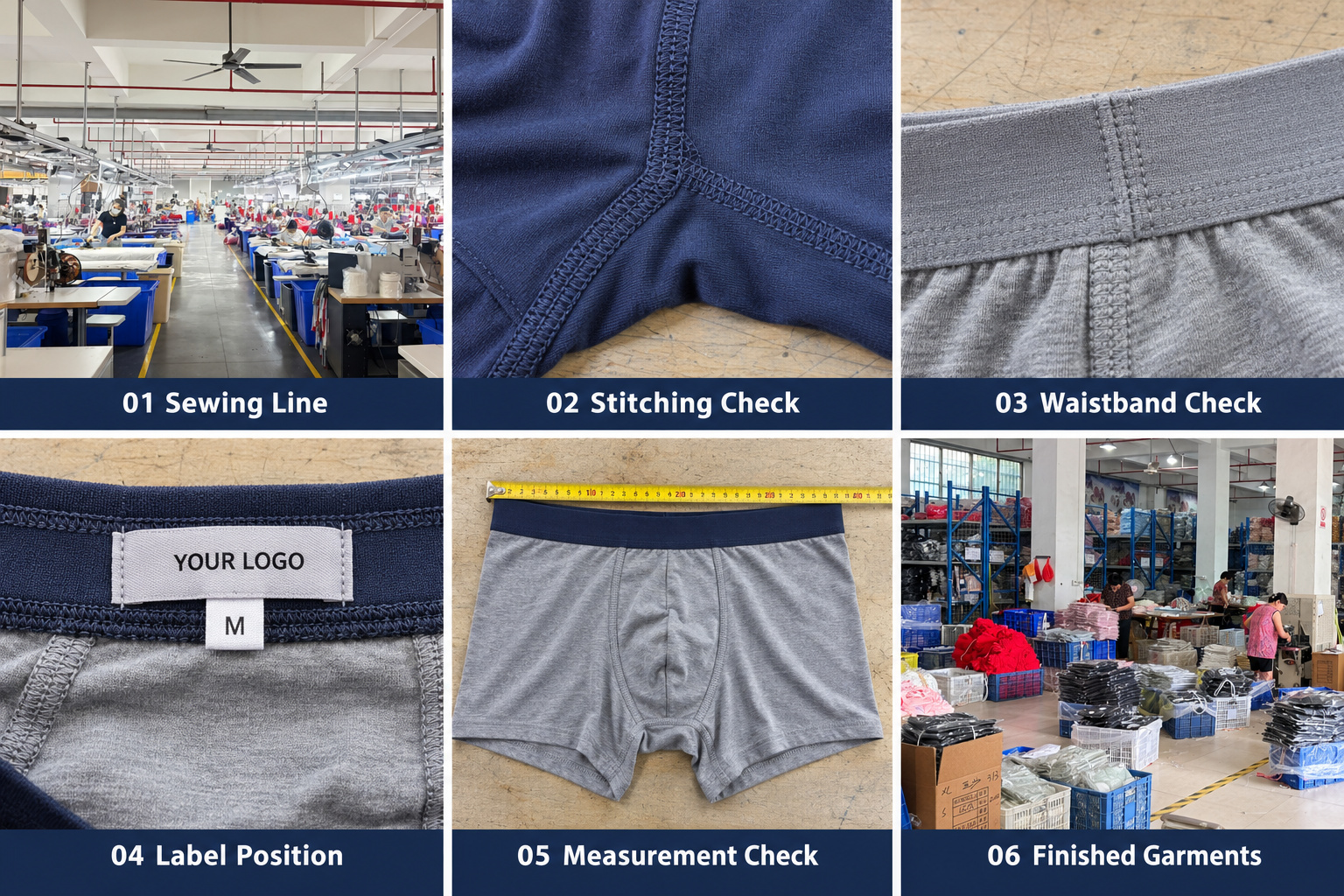
First-piece approval checks the initial assembled garment before the same construction is repeated across the batch. Relevant points include stitching, panel alignment, key measurements, waistband attachment, labels and branding position.
In-line inspection then checks these details as production continues. Identifying a repeated sewing issue early allows it to be reviewed before more garments reach the final stage.
Our measurement and inspection work compares the relevant dimensions and workmanship with the approved specification. Measurement checks use agreed methods so production results can be compared consistently.
 Plan Assembly Around the Order Details
Assembly requirements vary with seam construction, garment panels, waistbands, branding and labels. These details affect the work involved and should be included when requesting a quotation.
Send your tech pack or reference sample, material requirements, size breakdown and branding details for review. Bulk production usually takes about 30–45 days after sample and order confirmation, depending on the complete order. Final inspection, packaging and shipment preparation are coordinated within the agreed production plan.